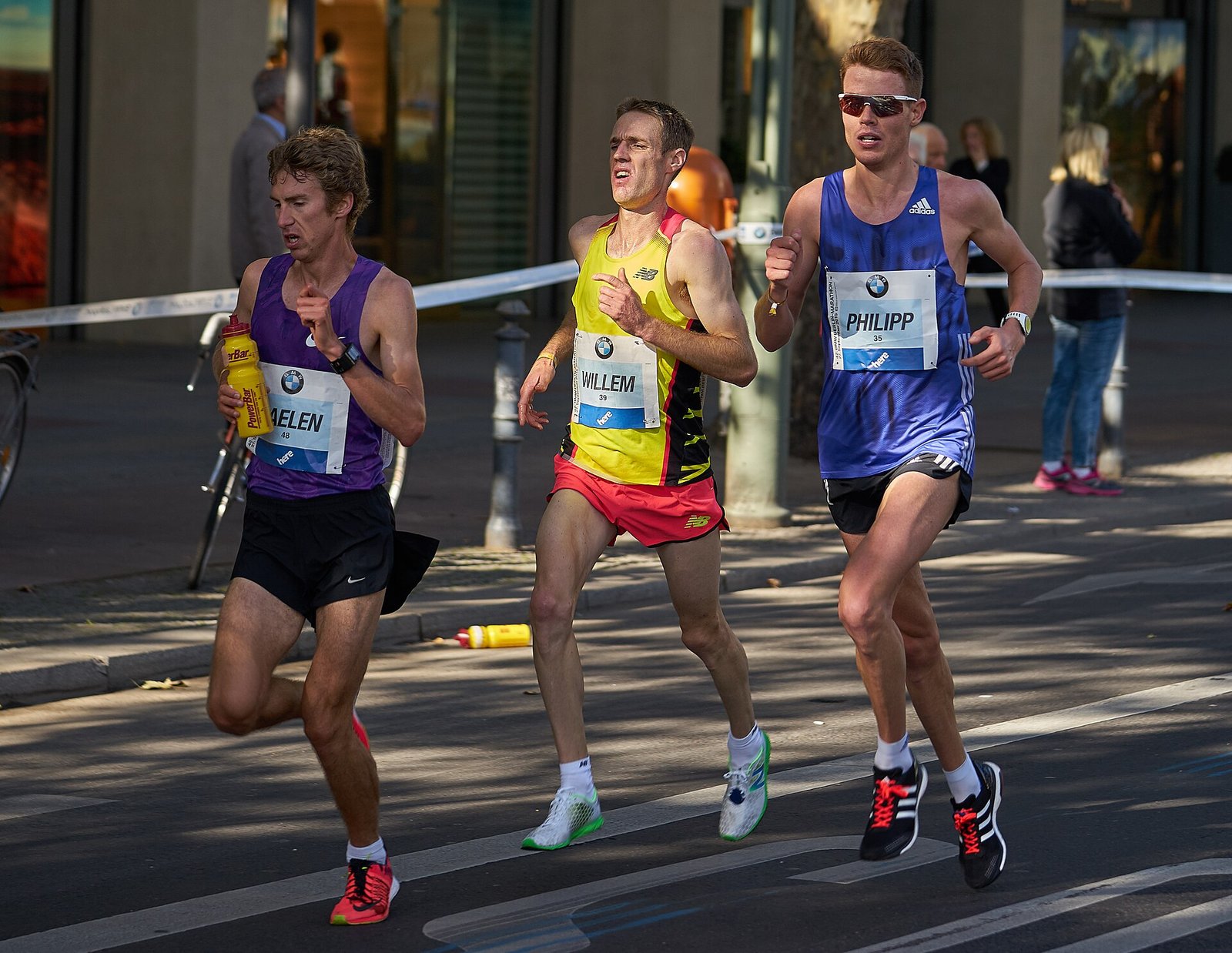
Road racing covers everything from a 5K, where fueling hardly matters, to a half marathon, where it can. The question is how much carbohydrate, and when, a runner actually needs.
Short races
Marathon Handbook’s summary of current guidance says most runners do not need carbohydrate during sessions under 60 minutes, apart from very intense efforts, fasted runs or double days. For 60 to 90 minutes, it suggests 0 to 30 g per hour for easy runs and 30 to 45 g per hour for harder or race-specific work.
Longer road races
For efforts of 90 minutes to 2.5 hours, the same summary suggests 30 to 60 g per hour for most runners, rising to 60 to 75 g per hour on harder long runs. Half-marathoners running longer than 90 minutes fall near this band.
What the newest review adds
A 2026 review in The Journal of Nutrition (Morton and colleagues) notes that the 2016 ACSM guidelines recommend up to 90 g per hour from multiple transportable carbohydrates, such as glucose and fructose mixtures, for exercise lasting more than about 2.5 to 3 hours. It says athletes often take 120 to 200 g per hour, that these doses are not yet confirmed as effective, and that the upper limit may rise to about 120 g per hour for trained participants.
Practical steps
- Match fuel to duration: do not over-fuel a 10K.
- Above roughly 60 to 70 g per hour, use blends of glucose or maltodextrin with fructose, as the sources recommend.
- Rehearse in training: higher intakes raise gut distress risk, so test products and amounts before race day.
What this does not cover
This article covers fueling during races. I did not find a verified source on pre-race carbohydrate loading, so it is not covered here.
Limits of the evidence
Much of the high-dose work comes from cycling, male athletes and lab settings, and female athletes are under-represented. Individual needs vary, so treat these numbers as ranges to test, not targets to hit.
Sources
- Morton et al., From Metabolism to Medals: Revisiting Carbohydrate Guidelines for Fueling Endurance Athletes During Exercise (The Journal of Nutrition, 2026)
- Marathon Handbook: How Much Fuel Do Runners Actually Need?
Updated November 14, 2026.
Photo: U.S. Air Force photo by Staff Sgt. Dennis Hoffman (Public domain), via Wikimedia Commons