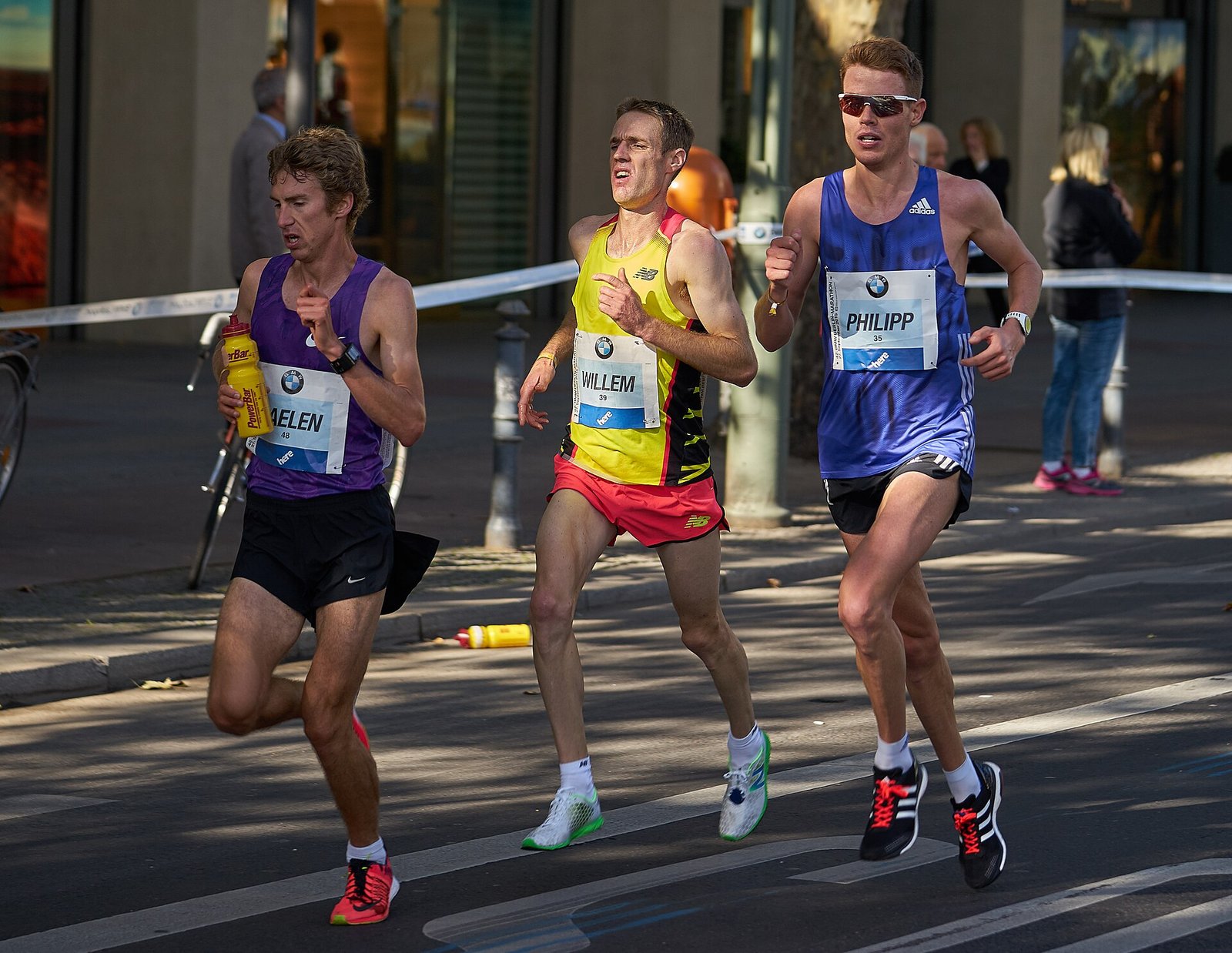
Marathon fueling advice has shifted in recent years. The long-standing recommendation, per the 2016 ACSM guidelines cited in a 2026 Journal of Nutrition review (Morton and colleagues), is up to 90 g of carbohydrate per hour from multiple transportable carbohydrates such as glucose and fructose mixtures for exercise longer than about 2.5 to 3 hours.
What marathoners are told today
Marathon Handbook’s summary suggests 60 to 90 g per hour for many marathoners, and 90 to 120 g per hour for well-trained, gut-trained runners who have a clear performance reason. The Morton review says contemporary research suggests the upper limit may rise from 90 to about 120 g per hour, at least for trained participants, based on emerging evidence, while noting the evidence is mostly male and lab-based.
The treadmill evidence
The Marathon Handbook article describes a two-hour treadmill run near marathon intensity by elite male marathoners (personal bests under 2:30) comparing 60, 90 and 120 g per hour. Running economy improved about 3% at 120 g per hour versus 60, but nausea, fullness and cramping were worse at the highest dose. The article does not name the study’s authors or year, so treat it as an illustration, not a citation.
How to apply it
- Start in the 60 to 90 g per hour range and rehearse it on long runs.
- Past about 60 to 70 g per hour use glucose-fructose or maltodextrin-fructose blends.
- Increase gradually; practising fueling in training generally reduces discomfort.
Limits of the evidence
High-dose studies are mostly in cycling, male athletes and labs, with few women and little real-world running data. Individual variation is substantial, and body size alone does not set the dose. Stop increasing if your stomach objects.
Sources
Updated November 14, 2026.
Photo: Denis Barthel (CC BY-SA 4.0), via Wikimedia Commons