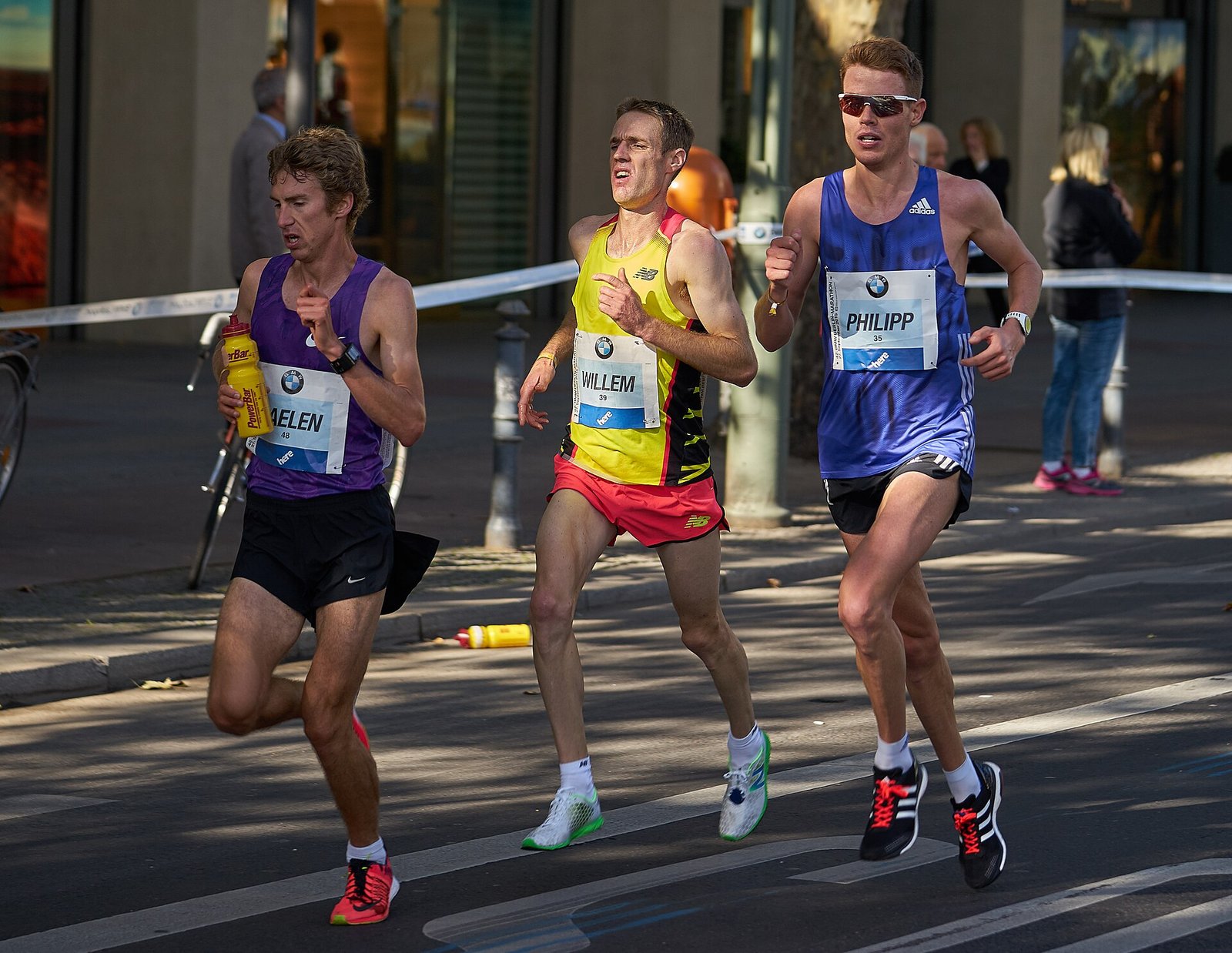
A marathon takes many runners three to five hours, which leaves plenty of time to take in more fluid than the body can lose. The 2015 consensus statement on exercise-associated hyponatremia (EAH) names exactly that, sustained intake beyond what sweat and urine remove, as the main risk factor for dangerously low blood sodium.
The consensus advice
The expert panel recommends drinking according to thirst, which it calls the safest individualized strategy, and it specifically advises against being told to drink before getting thirsty. Hot weather increases the risk, so marathons held in warm conditions deserve extra attention.
What this means across a marathon
- Early miles: Skip the urge to “bank” fluid. If you are not thirsty, you do not need to drink at every station.
- Back half: Fatigue and a long time on feet are when runners are most likely to follow a habit rather than their thirst. Check in with your body at each station.
- Finish: Headache, nausea, swelling in hands or feet, or confusion after a long race deserve medical attention, not more water.
Fueling and fluid are different questions
Carbohydrate intake is a separate decision from how much to drink. Marathon Handbook’s summary suggests 60 to 90 g of carbohydrate per hour for many marathoners, which can be taken in through gels and chews without matching fluid volume to a fixed schedule.
Limits of the evidence
The consensus statement guides individuals rather than giving a single number, and sweat rates differ widely. Heavy sweaters in heat may need more than light sweaters in cool weather, which is why practising in training matters. Medical conditions and certain medications change fluid handling, so ask a clinician if that applies to you.
Sources
Updated November 14, 2026.
Photo: Denis Barthel (CC BY-SA 4.0), via Wikimedia Commons